
How Much Does a Trading Platform Cost? Pricing Explained
How much does it cost to launch a trading platform under your own brand? The answer depends on the type of software, the functionality included, the amount of customization required, and the ongoing services provided after deployment.
When researching binary options platform cost, buyers often encounter prices that appear difficult to compare. One supplier may advertise a relatively low setup fee, while another offers a more comprehensive package containing administrative tools, payment integrations, affiliate management, and technical support.
A lower entry price may require additional spending on essential features. A more complete software package may involve a higher initial investment but reduce the need to purchase separate modules or arrange independent technical maintenance.
For entrepreneurs, affiliate teams, and companies planning to establish their own trading brands, the practical goal is to understand the total cost of launching and operating the technology, rather than focusing exclusively on the price advertised on a landing page.
This guide explains how white label trading software is priced, which expenses influence the final budget, and how to evaluate commercial proposals. It also explores Bintech’s All Inclusive approach, flexible project configurations, and assistance after platform delivery.
How Much Does a White Label Trading Platform Cost in 2026?
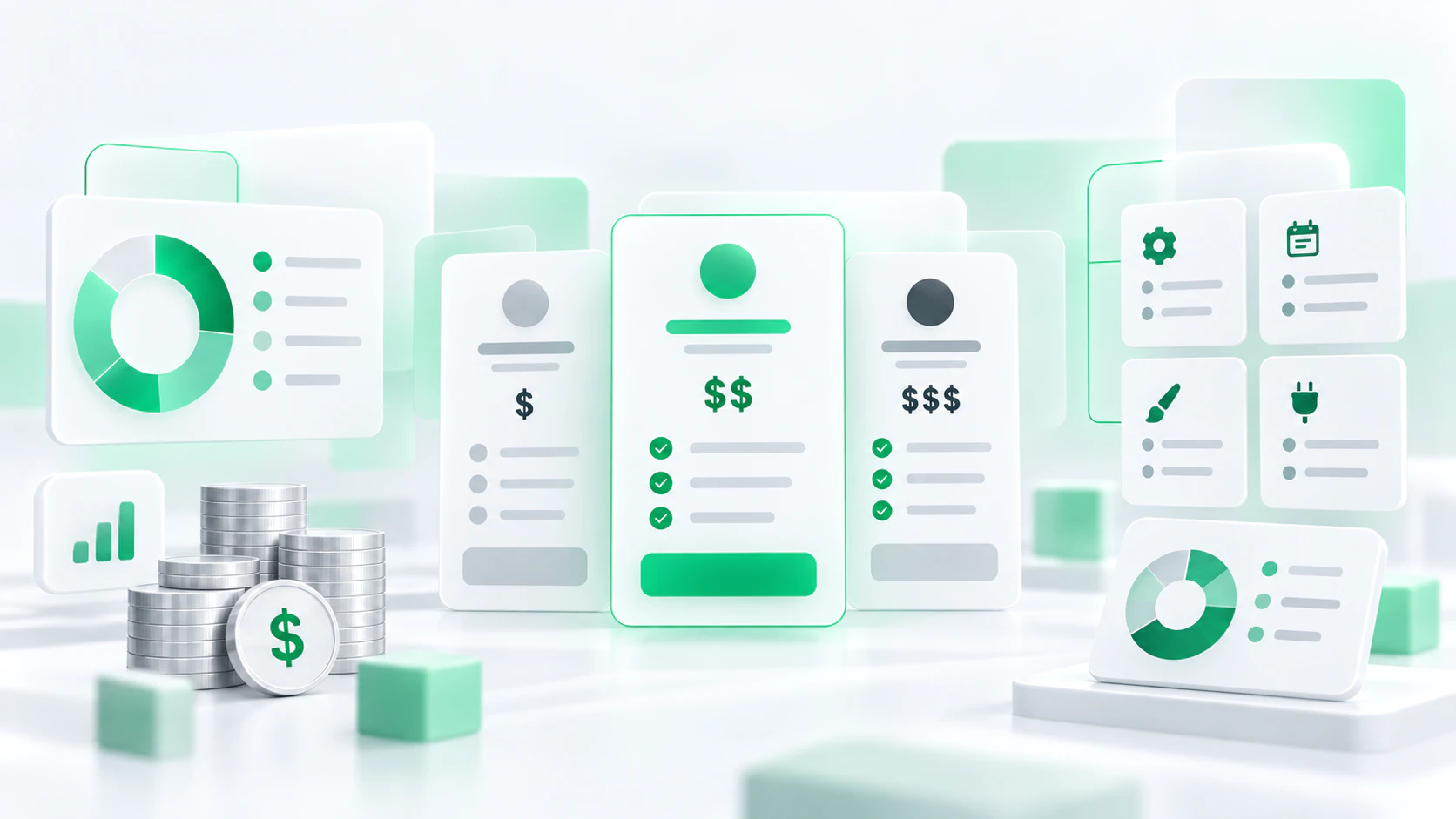
The cost of a white label trading platform varies depending on the software package, technical requirements, customization options, and ongoing services included in the proposal.
Based on selected publicly advertised software offers, entry-level ready-made solutions can start at approximately $15,000-$20,000. More extensive white label configurations may begin around $30,000-$60,000, while individually developed trading systems can require substantially larger investments.
These figures provide general reference points rather than fixed market prices. A platform advertised at a lower starting price may include fewer customization options, integrations, or technical services than a more comprehensive solution.
| Type of Solution | Indicative Starting Cost | What Influences the Final Price |
| Basic Ready-Made Platform | Approximately $15,000-$20,000 | Standard software, basic branding, existing functionality, and initial deployment |
| Extended White Label Platform | Approximately $30,000-$60,000 | Broader configuration, design customization, payment integrations, and additional operational requirements |
| Individual Software Development | From approximately $80,000 | Custom architecture, software engineering, interface development, integrations, and testing |
These price ranges are indicative examples based on selected publicly advertised offers, not independently verified industry averages. They do not represent Bintech pricing. Final quotations and recurring service fees vary according to individual project requirements.
When evaluating the cost of a trading platform, the most important consideration is what the client receives for the investment.
For example, a lower starting price may not cover every feature required for daily operations. Administrative tools, affiliate management, payment connections, mobile functionality, and technical support can influence the total project budget if they are offered separately.
A comprehensive software package may provide better cost predictability by including essential functionality within the agreed solution.
What Is Included in the Price of Trading Platform Software?
A ready-made trading platform contains several interconnected components. The price of the complete solution depends partly on which of them are included as standard functionality and which require separate development or additional agreements.
Trading Terminal and Account Functionality
The trading terminal is the interface customers interact with directly. It may include market charts, technical indicators, different chart display modes, account controls, and order functionality.
The cost is influenced by the complexity of the trading interface and the work required to adapt it. For instance, modifying an existing layout generally involves a different development scope from creating a new trading interface with custom interaction mechanics.
A platform’s account functionality should also be considered. Depending on the product, the operator may need real and demo accounts, account histories, profile settings, and additional engagement features.
When reviewing a proposal, it is useful to establish whether these functions are part of the standard product or separate additions.
Administrative Back Office
The back office is where the operator manages the business-facing side of the platform. It may provide financial analytics, user management, access controls, transaction information, trading settings, and operational reporting.
A limited administrative interface can reduce the apparent cost of an initial offer, but it may leave the operator dependent on technical specialists for ordinary management tasks.
A more complete back office gives authorized staff direct access to supported settings and relevant activity data. This is especially valuable when the platform begins serving a larger audience or working with external partners.
Bintech includes an administrative environment with financial and traffic-source analytics, management of platform modules and content, individual activity records, and configurable user roles.
Payment Integrations
Connecting payment methods may involve software configuration, API integration, testing, and coordination with the selected payment provider.
Some trading software suppliers include existing integrations in their standard offering. Others may charge for each additional payment connection or for modifications required by a particular service provider.
The cost of connecting a payment method is not necessarily the same as the fees charged by the payment provider.
A payment company may establish its own transaction commissions, settlement conditions, or service charges. These expenses should be identified separately from the trading software quotation.
Affiliate and Marketing Tools
Businesses that plan to work with publishers, media buyers, or affiliate teams should check which partner management functions are included.
An integrated affiliate system can reduce the need for a separate software product, particularly when the operator requires partner statistics, referral activity monitoring, and administration of agreed commission conditions.
Bintech includes built-in affiliate functionality with RevShare support and detailed partner activity reporting. Commercial conditions are configured according to the requirements agreed with the client.
For a closer look at partner operations, read our guide to affiliate management software for trading platforms.
Mobile Experience and Additional Features
Mobile accessibility, multilingual interfaces, account promotions, tournaments, and user engagement features can also influence the overall software package.
Before paying separately for a mobile solution, determine whether the provider already offers a responsive interface or Progressive Web App (PWA). A PWA allows users to access an app-like experience through supported browsers and devices without necessarily requiring a separately developed native application.
Bintech includes mobile-optimized functionality and PWA support within its ready-made platform, alongside its standard trading and management tools.
One-Time Setup Fees, Monthly Charges, and Variable Pricing
Even if two providers offer comparable software, their payment structures may be different. Understanding these arrangements is essential because they affect cash flow after the platform has been deployed.
The main distinction is between the initial implementation payment and the cost of continued technical service.
| Pricing Component | What It Covers | Budget Consideration |
| One-Time Setup | Preparation, configuration, branding, and deployment | Initial investment required before or during launch |
| Fixed Recurring Service Fee | Agreed ongoing software services and technical responsibilities | Regular payment that can be included in monthly forecasts |
| Variable Service Fee | Payment calculated using a contractually defined business indicator | Amount may change according to the agreed calculation method |
| Additional Development | New features, custom integrations, or individual design requirements | Separate budget based on approved project scope |
| Third-Party Expenses | Independent services such as payment processing or external tools | Charges governed by the relevant third-party agreements |
Not every provider uses all these components. Some offer relatively simple fixed-fee arrangements, while others use commercial models that include variable payments.
If a proposal refers to trading turnover, revenue, deposits, or transaction volume, the client should understand exactly which indicator is used for billing. These terms represent different financial measures.
For example, a percentage of trading turnover does not necessarily produce the same amount as a percentage of platform revenue. Likewise, a minimum monthly payment can materially change the cost of operating a project with low initial activity.
Any variable payment model should specify the calculation basis, billing period, thresholds, minimum charges where applicable, and how adjustments are handled.
How to Calculate the Total Cost of a Trading Platform
A platform’s advertised starting price does not show what the client will spend over an entire year. The simplest way to create a realistic technology budget is to include both implementation expenses and recurring commitments.
First-year technology cost = Initial setup + Agreed customization + Integration work + Recurring platform service + External technology expenses.
Where the supplier charges a variable service fee, replace the fixed annual service amount with the sum of the actual monthly charges calculated under the agreement.
Calculate the Budget Using Your Actual Quotation
The following table shows how expenses can be organized without relying on invented market averages or treating hypothetical figures as an official price.
| Expense | Calculation |
| Initial Setup | Amount quoted for branding and deployment |
| Custom Development | Sum of separately approved development tasks |
| Payment Integrations | Applicable one-time connection costs |
| Monthly Platform Service | Sum of payments due during months 1-12 |
| External Technology Services | Provider fees due during the same period |
| Total First-Year Technology Cost | Sum of all applicable items above |
This calculation becomes particularly useful when comparing a provider with a low initial payment but substantial monthly charges against another provider with a higher setup fee and more services included.
It also identifies the difference between the technology budget and the overall business budget.
Marketing campaigns, employee compensation, affiliate remuneration, customer service, and other commercial activities should be planned separately. These costs may be necessary for the business, but they are not automatically part of the price charged by a software supplier.
Why a 12-Month Comparison Is More Useful Than a Starting Price
Suppose one proposal includes the required reporting and partner management tools, while another excludes them. The lower initial price is not enough to determine which is more economical.
The buyer must establish the cost of acquiring the missing functionality, then add any recurring service obligations. If those features are essential from the beginning, excluding their costs would produce a misleading comparison.
A twelve-month estimate provides a consistent evaluation period. For longer-term planning, the same method can be extended to 24 or 36 months, taking into account any scheduled price changes or additional operating requirements.
How to Compare Trading Platform Quotes Correctly
The most effective comparison is based on a consistent set of requirements. Rather than asking different suppliers for their cheapest package, send each provider the same project description.
For example, a company might require a branded trading interface, a dedicated server, support for selected languages, an administrative panel, an affiliate program, and integration with specific payment methods.
Each provider should then explain which requirements are already covered and which would require additional work.
| What to Compare | What to Confirm |
| Software Functionality | Which required modules are included in the quoted package? |
| Brand Customization | Which visual changes are standard and which require additional design work? |
| Technical Infrastructure | Who configures, monitors, and maintains the operating environment? |
| Payment Systems | Which integrations are already available, and are there separate connection costs? |
| Recurring Payments | How are monthly charges calculated, and can they change? |
| Project Delivery | What documentation, onboarding, and acceptance process are provided? |
| Future Modifications | How are additional features evaluated and approved? |
A comparison prepared this way reveals differences that may not be visible on promotional landing pages.
It also helps prevent unnecessary purchases. If a provider already includes the tools your company requires, there is little reason to budget for a duplicate external product without a specific operational need.
Bintech Pricing: All Inclusive and No Hidden Charges
Bintech’s commercial approach is based on a complete ready-made trading platform rather than a collection of separately priced standard modules.
The All Inclusive solution contains the core trading and administrative functionality, partner tools, mobile-friendly features, and other standard software modules within the agreed package.
Clients do not need to purchase each standard platform feature as an independent add-on after the project has been agreed.
Bintech does not apply hidden charges for standard functionality included in the agreed package. The initial implementation amount and ongoing service conditions are discussed in advance, allowing the client to understand the financial obligations associated with the proposed configuration.
Requests for entirely new functionality, individual design work, or additional integrations outside the agreed scope are evaluated separately. The required work, cost, and implementation conditions are discussed with the client before approval.
Transparent pricing does not mean that every possible future modification is free. It means that the client understands what is already included and can decide whether additional work is worth the investment.
Bintech provides a current presentation and discusses the commercial proposal individually. This allows prospective clients to review the actual package and clarify its terms before proceeding.
Can an Existing Project Configuration Reduce the Launch Budget?
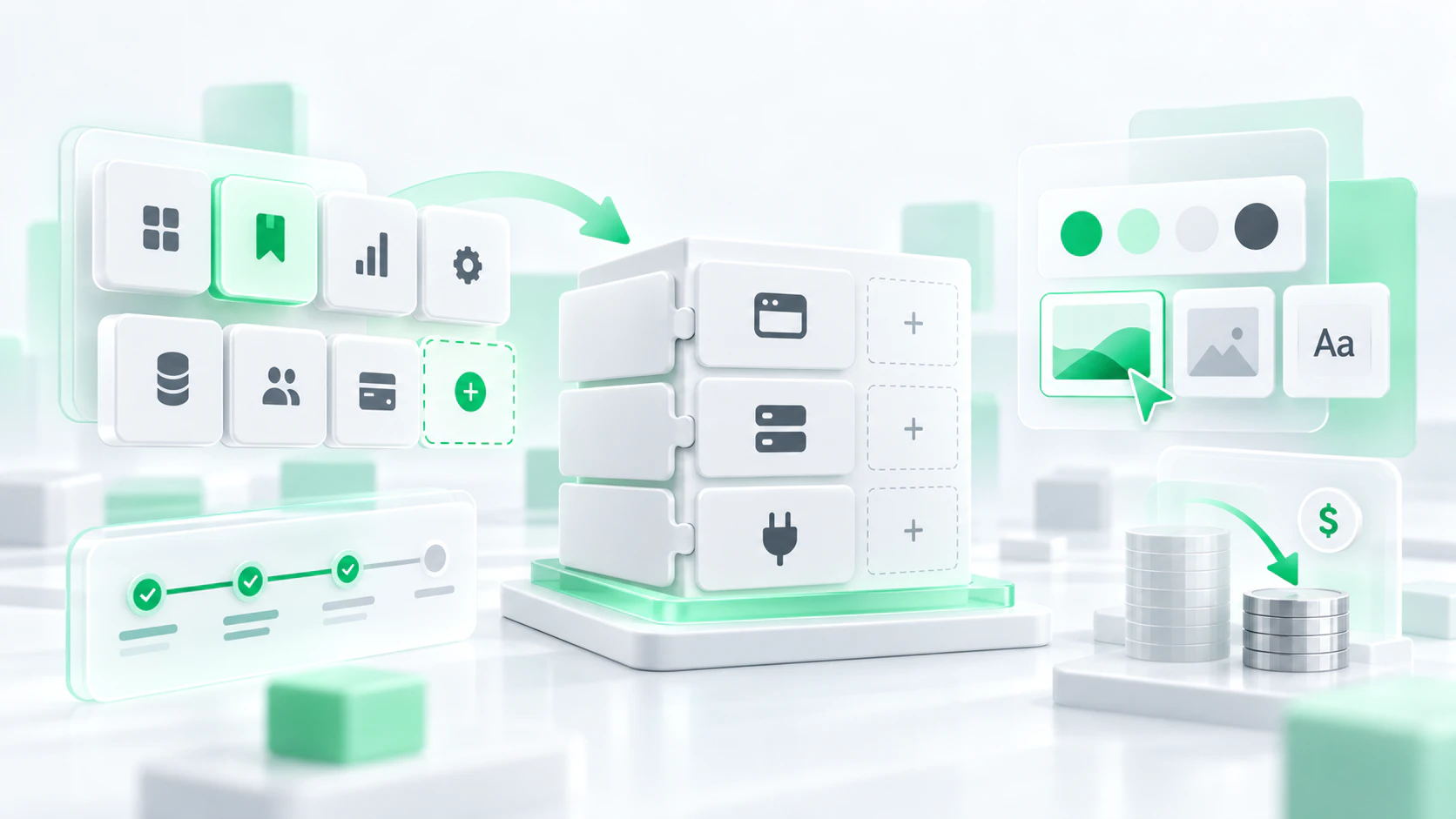
Not every business requires a completely new visual concept or an extensive set of individual modifications. In some cases, a more economical approach may be to adapt an existing project configuration.
Bintech can discuss whether a previously prepared configuration is available and suitable for the client’s requirements. Depending on the project, it may be possible to retain parts of an existing design and software setup while adapting branding, content, visual elements, and supported settings.
This approach may reduce the volume of additional development work. If fewer modifications are necessary, the manager may also be able to discuss more favorable individual pricing.
When This Option May Be Suitable
Consider an entrepreneur who wants a branded trading platform but does not require an entirely unique user interface. If an available project configuration is sufficiently close to the intended design, adapting it may be more practical than commissioning every visual component separately.
The same principle applies to implementation time. Reusing suitable existing elements can reduce preparation work, although the final schedule still depends on the chosen configuration and any required integrations.
Clients can explain their preferred budget and launch timeframe to a Bintech manager, who can clarify available options and the work needed to adapt them.
Existing project configurations, individual price adjustments, and shorter implementation periods are subject to availability and separate agreement. They should be treated as potential options rather than guaranteed conditions for every order.
What Happens After You Receive the Platform?

Software delivery is not the end of the implementation process. The operator also needs to understand the available management tools and establish a practical routine for working with the system.
This is why onboarding and support should be considered when evaluating the value of a platform quotation.
Documentation and Training
Bintech provides instructions when a completed project is transferred to the client. The onboarding process includes an overview of the product, guidance on the administrative panel, online consultation, and a walkthrough of key functionality.
Support managers explain how to use the available controls and answer questions about platform management. Depending on the client’s needs, consultations can cover administrative settings, financial information, user activity, partner management, and other supported tools.
This is particularly useful for entrepreneurs who are familiar with marketing or commercial operations but have limited experience administering trading technology.
Instead of learning the entire system through trial and error, the client’s team can receive explanations directly from people familiar with the product.
Technical Maintenance and Ongoing Assistance
Bintech provides continuing technical assistance under the agreed service conditions.
The support offering includes round-the-clock platform monitoring, server maintenance, backup routines, and access to the support team.
If the client later wants to introduce a new feature or modify the design beyond the existing configuration, the request can be reviewed by the technical team. The manager then clarifies the expected cost and implementation timeframe before the work is approved.
These services allow the operator to focus on managing the project and developing its business while Bintech handles the agreed technical responsibilities.
How to Get an Accurate Quote from Bintech
A useful quotation starts with a clear description of the project. It does not need to be a lengthy technical specification, but it should give the manager enough information to identify a suitable configuration.
For example, a prospective client can explain whether the project will use an existing design or require an individual visual style, which languages and currencies are needed, and whether particular payment integrations or additional software features are essential.
The desired launch period and available budget are also worth discussing. These details help determine whether the standard All Inclusive offering meets the requirements or whether a different configuration should be considered.
If the client is interested in an already prepared project that can be adapted, this can be raised during the initial conversation.
After reviewing the requirements, the Bintech team can explain the available functionality, discuss technical implementation, provide the current presentation, and prepare the relevant commercial proposal.
For a wider overview of how branding and platform setup work, see our White Label Trading Platform guide.
Frequently Asked Questions About Trading Platform Pricing
Is it possible to launch a trading platform without developing software from scratch?
Yes. A ready-made white label platform provides an existing software foundation that can be adapted to a company’s brand and agreed requirements. This avoids commissioning an entirely new trading system when established software already meets the project’s needs.
Does Bintech publish a fixed price for every project?
Bintech provides an All Inclusive software offering, but final commercial conditions depend on the agreed implementation scope and service arrangements. Prospective clients can request the current presentation and discuss the applicable price with a manager.
Will additional functionality increase the price?
Standard modules are included in Bintech’s agreed package. Individual features, custom designs, and integrations outside that scope may require additional development. The work and corresponding costs are discussed before approval.
Can I request a platform configuration within a specific budget?
Yes. You can describe your budget and required functionality during the initial consultation. Depending on availability, Bintech may be able to suggest an existing configuration that can be adapted to your brand. Any resulting price or implementation advantages are assessed individually.
Are payment processing fees included in a trading platform quote?
Not necessarily. Third-party payment providers establish their own commercial conditions. These charges should be distinguished from the cost of the software and any agreed technical integration work.
Does Bintech provide help after the platform is delivered?
Yes. Clients receive operational instructions, onboarding consultations, explanations of the main administration tools, and assistance from support managers. Ongoing technical support and maintenance are provided according to the agreed service conditions.
Request a Trading Platform Price Based on Your Project
The cost of a trading platform is best evaluated through the complete scope of the software and services provided. Public starting prices can help establish an initial reference point, but an accurate budget requires a clear understanding of the selected functionality, implementation work, recurring charges, and operational responsibilities.
Bintech offers a ready-made trading platform with standard software modules included, transparent commercial conditions, optional individual customization, and technical assistance throughout the agreed cooperation.
Whether you are planning a new trading brand or exploring ways to expand an existing project, the Bintech team can help you review available configurations and discuss a suitable implementation approach.
Contact Bintech to request the current platform presentation, discuss pricing, and clarify available project options.